
Vinted Reviews online tend to land at opposite ends of the scale. The app holds a 4.8-star average in the US App Store across roughly 47,000 ratings, while the vinted.com profile on Trustpilot shows 1.2 out of 5 from more than 23,000 reviews (both checked November 4, 2026). Both numbers are real. Neither tells you much on its own.
Vinted is a secondhand marketplace where people buy and sell pre-owned fashion, home goods, electronics, and more. It launched in the US in January 2026 with a New York-focused push, and the pitch is easy to like: sellers pay no commission, buyers pay a fee at checkout, and Vinted generates the shipping labels.
So is Vinted legit, safe, and worth using? This review looks at the US marketplace from both sides of a sale, including what happens when an order goes wrong. It also covers the catch that matters most to would-be resellers: Vinted’s US terms are written for personal use, not for running a resale business.
Policies and fees change often. Everything here reflects Vinted’s published US information as of early November 2026, including the updated US terms Vinted rolled out on October 8, 2026.
What Is Vinted?
Vinted was founded in Vilnius, Lithuania, in 2008 and became the country’s first tech unicorn in 2019. It is privately held, with backers that include Accel, EQT Growth, Insight Partners, and Lightspeed, according to its US launch announcement. The Next Web reports 2025 revenue of about €1.1 billion.
The US service is run by Vinted, Inc., a Delaware company, under its own US Terms and Conditions. Its American push began in New York, as FashionUnited reported. Vinted was largely a European business before that, which is why UK and EU rules often get mixed up with US ones. They are not the same.
The catalog covers women’s, men’s, designer and kids’ items, plus home, electronics, entertainment, hobbies and collectibles, and sports. Vinted describes itself as a hosting intermediary: it doesn’t buy or sell items and isn’t a party to transactions between members. It earns money from the fee buyers pay on each order and from optional seller promotion tools.
How Does Vinted Work?
Signing up is free. You must be 18 or older and live in the continental US, Alaska, Hawaii, or Puerto Rico, and you must verify your email within seven days. Disposable or masked email addresses are not accepted.
From there, it works like most marketplaces. You browse, chat with sellers, and buy with the Buy button. Your money goes into escrow with Vinted’s wallet provider, the seller ships with a prepaid label, and once the buyer’s window to report a problem closes, the seller gets paid.
Who does what
- Buyers pay the item price, shipping, and the Vinted fee, plus sales tax where it applies.
- Sellers list items, ship within five business days, and are paid once the order is completed.
- The payment provider. In the US, Vinted Wallets come from Adyen N.V., a licensed Dutch bank, which can require identity checks.
- Carriers move the parcel. Vinted says it is not a carrier.
- Vinted runs the marketplace, enforces its rules and, through customer support, has the final say in disputes.
Vinted Reviews: Is Vinted Legit?
As a company and a working marketplace, yes. The harder question is whether any particular transaction, and Vinted’s handling of it, will go well.
Here is what supports legitimacy. Vinted, Inc. is a registered Delaware entity with published terms, a refund policy, and catalog rules. It belongs to a Lithuanian group with more than 2,000 employees. Buyer payments sit in escrow with a licensed provider, account blocks come with an appeal process, and there is a customer support system, even if many users say it is hard to reach.
Now the distinction that matters. A legitimate company is not a guaranteed safe transaction. Vinted’s terms say it isn’t responsible for other users’ conduct and that the refund policy is not insurance. The US terms also include binding arbitration and a class action waiver, with a 30-day opt-out window after you first become subject to it. That isn’t unusual for a US marketplace, but read it before you click “accept.”
Calling Vinted a scam because some users report bad outcomes would be unfair. Calling it risk-free would be equally off. It is a real marketplace with real protections and real gaps.
How to Buy on Vinted
Vet the listing
Start with the photos. Vinted’s terms require sellers to use their own pictures showing the item’s real condition, so be wary of anything that looks like a catalog shot. Read the description for defects, check the seller’s rating, review count, and history, and ask questions in chat before buying.
For branded pieces, look for clear photos of tags, labels, and stitching, and run a reverse image search on the main photo to catch pictures lifted from other sites. You can propose a lower price with an offer, but a seller accepting your counteroffer finalizes nothing. Under Vinted’s terms, an item sells only after the buyer completes checkout and accepts payment.
Check out and inspect
Use the Buy button and pay through Vinted. That is what triggers escrow and the refund policy. At checkout, choose a delivery option and review the full price breakdown; after the seller ships, you can track it in the app.
When the parcel arrives, open it right away. Your reporting window is just two calendar days. If something is wrong, photograph or film the item and packaging, then press “I have an issue” in your conversation with the seller. Don’t wash or wear the item first. If everything checks out, confirm and leave a review.
How to Sell on Vinted
Selling is free to start, and the basic steps are simple.
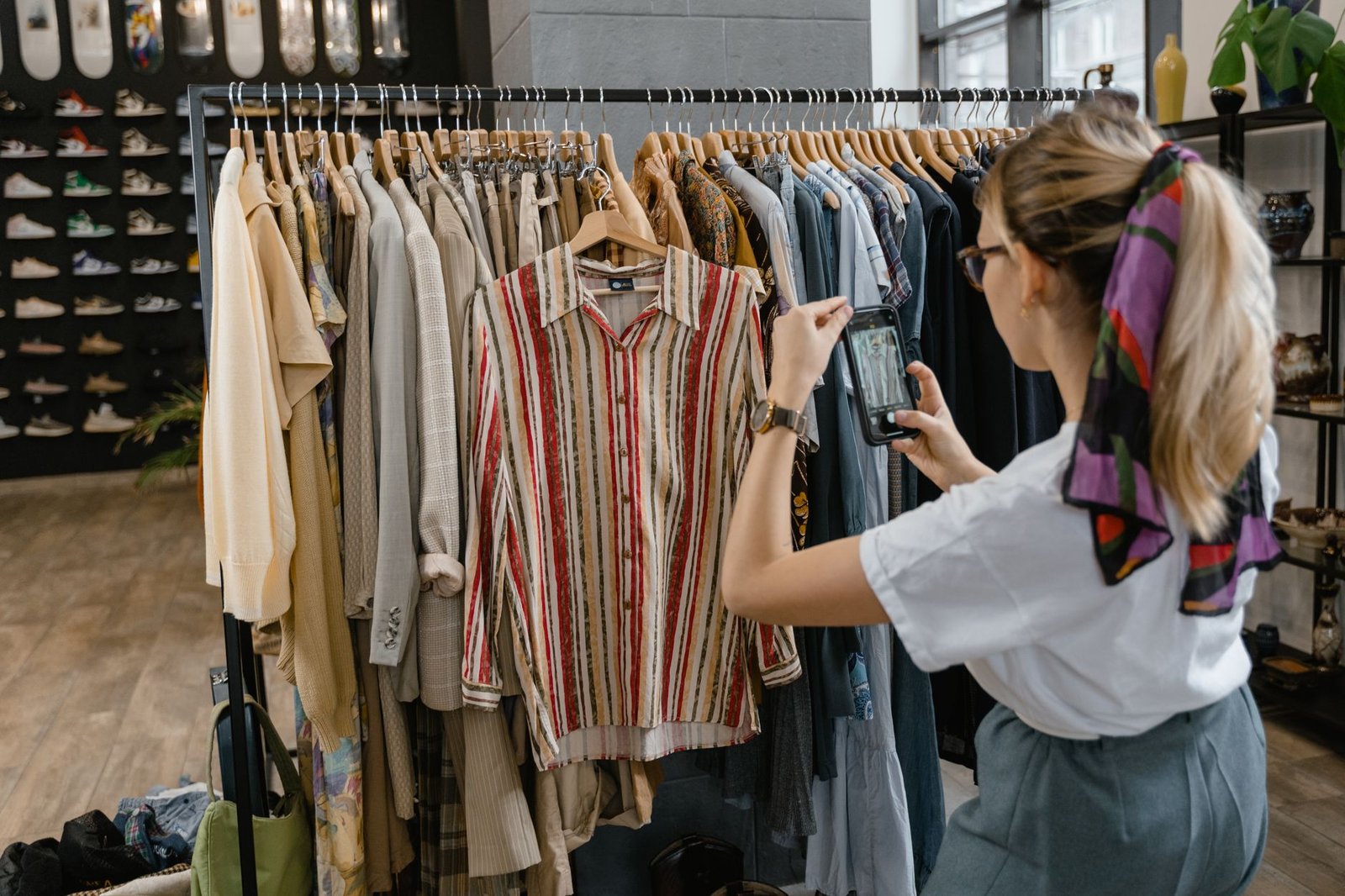
- Create the listing. Take your own photos in good light, show flaws up close, and write an honest description with brand, size, condition, and measurements. Vinted’s terms bar photos taken from the internet.
- Price it realistically. Check what similar items are listed for. Buyers can send offers, so leave a little room.
- Open your Vinted Wallet. New sellers must activate one within five calendar days of their first sale, or the item can’t ship, and the transaction is cancelled. The provider may ask for identity details.
- Ship on time. Pack the item, print the prepaid label, and send it within five business days. Use the label Vinted generated, because the wrong label or method can cancel the order automatically. Keep your drop-off receipt until the order is completed.
- Wait for completion. After delivery, the buyer has two calendar days to raise an issue. If none is raised, your money moves from pending to available within about two days.
- Withdraw your earnings to a US bank account. Vinted’s withdrawal page sets a $0.10 minimum and says transfers can take up to five business days.
Three rules trip up new sellers. Don’t delete and relist the same item repeatedly or upload items in bulk, and don’t use bots or other external tools without Vinted’s permission. Items that break the Catalog Rules, such as counterfeits or recalled products, get hidden or removed, and repeat violations can lead to a ban. And you are responsible for your own taxes, so check IRS guidance or ask a tax professional.
Vinted Fees: Does Vinted Charge Sellers and Buyers?
For sellers, the headline is simple. Vinted’s app listing says you keep 100% of what you earn, with no listing fee and no commission. Buyers carry the cost.
Buyers pay the item price, shipping, and a mandatory charge Vinted now calls the Vinted fee. Until October 8, 2026, it was the Buyer Protection fee, and Vinted says the rename adds no new charge. Vinted describes the fee as usually 5% plus $0.70. The exact amount appears at checkout, so treat those figures as typical rather than guaranteed.
| Cost | Who pays | Typical amount | What to know |
|---|---|---|---|
| Listing fee | No one | $0 | Listing items is free. |
| Seller commission | No one | $0 | Sellers keep the full sale price. |
| Vinted fee (formerly Buyer Protection fee) | Buyer | Usually 5% + $0.70 | Shown at checkout. Refunded when a refund claim succeeds. |
| Shipping | Buyer, normally | Varies by carrier and package size | Vinted has run $0.99 and free-shipping offers, and rates changed in September 2026. |
| Sales tax | Buyer | Varies | Collected where marketplace facilitator laws apply. |
| Promotion tools (Item Bump, Showcase) | Seller, optional | Price shown in the app before purchase | Not required to sell. |
Here is how the math plays out on a $25 sweater. This is an illustration, and your checkout screen is the only number that counts. The fee is $1.25 plus $0.70, or $1.95. Add a $0.99 shipping charge and the buyer pays $27.94 before any sales tax, while the seller receives $25.00. On a $10 item, the same formula adds $1.20, or 12% of the price. That flat $0.70 hits cheap items hardest.
Don’t assume European arrangements apply here. Vinted Pro, the professional-seller account, is offered in several European countries but not in the US.
Vinted Shipping: How Does Delivery Work?
Vinted’s US help center lists USPS as available across all 50 states, Washington, D.C., and Puerto Rico. FedEx, Better Trucks, and SpeedX are offered for domestic shipping within the continental US, and SpeedX and Better Trucks only reach specific regional ZIP codes.
Buyers pay for shipping, and the price depends on carrier and package size. Vinted has leaned on promotions: an August 27 help page described free or $0.99 shipping on qualifying domestic orders. By September 25, Value Added Resource reported variable rates, with USPS and FedEx starting at $0.99 for small and medium packages and $3.19 for large ones. Prices move, so check at checkout.
Sellers must ship within five business days using the prepaid label for the method the buyer chose, or the order is cancelled. Custom shipping exists for certain item categories, but if you skip Vinted’s prepaid shipping, lost or damaged parcels and carrier claims become your problem.
Tracking comes from the carrier, and Vinted’s terms say it isn’t liable for inaccurate carrier data. When a parcel is late, Vinted notifies the buyer that it should have arrived or appears lost, and that notice starts the two-day clock to report a problem. If a properly packed item is lost or damaged, the buyer can get a refund, and the seller may receive compensation that can depend on parcel size or carrier. Sellers who ignore Vinted’s packaging rules risk losing it, so pack carefully and keep photos.
Vinted Buyer Protection and Refund Policy
Vinted’s refund system applies to purchases made with the Buy button, and your payment stays in escrow until the order is completed. The rules appear in the terms and the Vinted Refund Policy. Since October 8, 2026, they sit under a standalone refund policy rather than a service called Buyer Protection, though Value Added Resource reports the basic process looks unchanged.
When you can get a refund
- The item was lost or damaged during shipping.
- It was significantly not as described, such as a different size or color, severe damage like stains, smells, or holes, or an item missing from a bundle.
- It was counterfeit.
Deadlines and process
You have two calendar days from Vinted’s notice that the item was delivered or seems lost to press “I have an issue.” Miss the window, and the order completes automatically.
For a not-as-described item, Vinted suggests working it out with the seller first. The seller can refund without a return or ask for the item back within five business days. Unless you agree otherwise, you pay return shipping, deducted from your refund. If the seller doesn’t act within 14 days, or the dispute continues, customer support decides.
Counterfeit claims follow a separate track. When Vinted sees strong evidence, the seller gets a window to prove authenticity: 24 hours under the earlier terms and 48 hours under the October 2026 version. If the evidence is ambiguous, Vinted cancels the order, and the buyer returns the item at their own expense.
Refunds are not automatic. Vinted can deny them if you already confirmed the item was fine, missed the deadline, couldn’t supply proof, used or washed the item, or are suspected of abusing the policy. A successful refund on a single item covers the item price, the Vinted fee, prepaid shipping, and sales tax, minus return shipping if you pay it.
Why you should never pay outside Vinted
Vinted says purchases made outside the site are at your own risk and carry none of its protections. Sellers who push you toward bank transfers or messaging apps are often scammers, and even honest ones leave you with no refund route.
Can You Make Money Reselling on Vinted?
The appeal is obvious: no listing fee, no commission, and a sale price you keep in full. That suits clearing out clothes, kids’ items and household goods you already own. Vinted doesn’t publish typical earnings, and nobody can promise what you will make, so treat online income claims with caution.
The catch is in the terms. Vinted’s US Terms and Conditions describe users as people who use the service “for your personal benefit only and not for any professional purposes.” Separately, the terms say an item you sell can’t be something you originally bought in bulk or as a dropship product, with a low-resale-value qualifier attached. The text doesn’t spell out how far that qualifier narrows the rule, so the cautious reading is to avoid both.
Vinted’s commercial selling page goes further. It says commercial selling isn’t allowed and that Vinted may hide listings and suspend or block accounts when it detects it. It treats members as commercial sellers if they have a legal business status, act for a business, or offer bulk-bought items, dropshipped products, or large quantities of cosmetics. Rentals count too, and professionally shot stock-style photos are viewed as a sign of commercial selling.
In Europe, Vinted offers a Pro account for professionals. In the US, it doesn’t, and Value Added Resource reports that the October 8 update kept the personal-use rule. Some US sellers say they were flagged for commercial activity despite not seeing themselves as resellers. Those accounts are anecdotal, but they show the line can feel fuzzy.
In practice, selling items you own and no longer need fits the intent of the rules. Buying items to resell them, sourcing bulk lots, dropshipping, or running a storefront-style account does not. If you’re unsure, read the terms yourself; this isn’t legal advice. Sellers who want a platform that openly accommodates professional selling should look at eBay or Depop, after checking each one’s rules.
Vinted Reviews: What Do Real Users Say?
Start with the numbers and their limits. As retrieved on November 4, 2026, the Vinted US App Store listing showed a 4.8 average from roughly 47,000 ratings. The vinted.com Trustpilot profile showed 1.2 out of 5 from about 23,100 reviews, with 59% rated one star and 32% rated five. Keep in mind that the Trustpilot page covers the vinted.com domain, not only US orders, and that review sites attract complaints. On the same page, Poshmark, eBay, and Mercari US also showed 1.2, while Depop showed 3.1.
What reviewers praise and complain about
Positive reviews usually mention how easy listing and buying feel, low prices, and the absence of seller fees. The complaints cluster in four areas:
- Customer support. The most consistent complaint is difficulty reaching a human, with reviewers describing automated replies and slow resolution.
- Refund and dispute outcomes. Buyers report losing money on items that never arrived or didn’t match the listing. Sellers say disputes favor buyers or that their evidence wasn’t weighed.
- Account bans and holds. Reviewers, including some in the US, describe accounts blocked with little explanation, often tied to counterfeit or commercial-selling flags, and balances held during ID verification.
- Delivery problems. Lost, delayed, or wrong parcels come up regularly.
Individual stories are impossible to verify, and many describe other countries. But the same themes repeat across thousands of reviews, so they are more than isolated gripes. Both pictures can be true: most orders likely go fine, while the ones that don’t can be hard to resolve.
Advantages and Disadvantages of Vinted
Advantages
- Free to list, with no seller commission.
- Wide secondhand variety at low prices, especially in fashion.
- Payments held in escrow with a licensed provider.
- A published refund policy for lost, damaged, and misdescribed items.
- Prepaid labels, tracking, and bundles in one built-in checkout.
Disadvantages
- Buyers pay a mandatory fee, and the flat $0.70 inflates cheap orders and the final checkout price.
- The two-day reporting window leaves little room for error.
- Many users report hard-to-reach, heavily automated support.
- Accounts can be restricted or banned, and payouts can be limited when that happens.
- Personal use only, with no Pro option in the US.
- The terms include binding arbitration and a broad license for Vinted to use your photos and descriptions, including for AI development. You can opt out of marketing use only.

Is Vinted Safe? Common Scams and Risks to Avoid
Vinted is a real marketplace, but scammers use it the way they use every peer-to-peer platform. None of the risks below are unique to Vinted.
- Fake payment notifications. A “buyer” claims payment is waiting. A real sale appears as an order inside your Vinted account, so don’t ship based on an outside message.
- Phishing links and fake support sites. Messages that push you to a login or card page, including ones that use QR codes, are red flags. Vinted’s phishing help page shows examples.
- Requests to pay or chat outside Vinted. Moving to WhatsApp, email, or a bank transfer removes your protection.
- Counterfeit and misleading listings. Check tags, stitching and photos, and watch for stock images.
- False delivery or item-switch claims. A dishonest buyer can claim an item never arrived or return something different. Photograph your packing and keep drop-off receipts.
- Requests for personal or financial details. You never need to hand over card details to receive money for a sale.
Stay inside the app, use only the official checkout and report suspicious messages to Vinted. Vinted says it can’t be held responsible for losses from scams, so if you lose money, report it to the FTC and contact your bank.
Vinted Alternatives in the United States
Vinted’s main US rivals work differently, and the best option depends on what you sell. The costs below are typical US seller costs as reported in recent fee guides. They change, so confirm on each site: Poshmark, Depop, Mercari, eBay, and ThredUp.
| Marketplace | Typical US seller cost | Best for | Worth knowing |
|---|---|---|---|
| Vinted | $0 commission. Buyer pays the Vinted fee (usually 5% + $0.70). | Decluttering personal items, mostly fashion | Personal use only. |
| Poshmark | 20% commission on sales of $15 and up; $2.95 flat below $15. | Branded fashion and social-style selling | Highest commission on this list. |
| Depop | No selling fee; 3.3% + $0.45 payment processing. | Vintage, streetwear and trend fashion | Now owned by eBay. |
| Mercari | Around 10% in 2026, per recent guides. Check Mercari’s fee page. | General goods, not just clothes | Fee details have changed in recent years. |
| eBay | Varies by category, often in the low-to-mid teens percent. | Electronics, collectibles, professional sellers | Largest reach and the most flexible for businesses. |
| ThredUp | Consignment model; payout depends on the item’s resale price. | Big closet cleanouts with little effort | Lower payout per item. |
None of these is automatically better. Poshmark’s social features suit some fashion sellers, Depop suits curated vintage, eBay handles almost anything and welcomes professional sellers, and ThredUp trades money for convenience. eBay completed its purchase of Depop in July 2026. Pick based on what you sell, how much effort you want to put in, and whether you’re a hobbyist or a business.
Who Should Use Vinted?
Vinted suits budget-conscious shoppers who like hunting for secondhand finds and don’t mind a small checkout fee. It also works for parents clearing out outgrown kids’ clothes and anyone selling a closet’s worth of unwanted items. You’ll do best if you’re comfortable photographing items carefully, shipping on a deadline, and handling a dispute yourself.
It’s a weaker fit if you want a platform that explicitly supports professional resale, need fast human customer service, or sell high-value goods where a dispute could cost real money. Item Verification, which checks designer pieces in Europe, isn’t offered in the US, according to Value Added Resource.
Final Verdict: Is Vinted Worth Using?
Vinted is a legitimate marketplace run by an established, well-funded company with published policies, escrowed payments, and a working refund process. That settles whether Vinted is legit. It doesn’t settle whether any particular order will go smoothly.
- Is Vinted legit? Yes, as a company and a functioning marketplace.
- Is it safe for buyers? Reasonably, if you use the official checkout, vet sellers, and inspect parcels within two days. The fee buys a refund process, not a guarantee, and complaints about support are common.
- Is it useful for casual sellers? Yes. Zero commission makes it one of the cheaper ways to clear out personal items, if you accept the time cost of photos, packing, and haggling.
- Is it suitable for professional resellers? No, not under the current US terms.
Go in with realistic expectations, keep every transaction on the platform, and read the terms and refund rules before you list or buy. Used that way, Vinted can be a solid, low-cost option. Used as a business, it is more likely to get you flagged than paid.
Frequently Asked Questions
Is Vinted legit in the United States?
Yes. Vinted, Inc. operates the US marketplace under published terms, and the US launch came in January 2026. Legitimacy doesn’t guarantee a good outcome on every order, though.
Is Vinted safe for buying and selling?
It can be, if you stay on the platform. Pay only through Vinted’s checkout, ignore requests to move to other apps, and watch for phishing. Inspect parcels quickly and photograph what you ship.
Does Vinted charge sellers any fees?
No listing fee and no sales commission. Optional promotion tools cost extra, and you cover your own packing supplies and taxes.
What is Vinted’s Buyer Protection fee?
It is now called the Vinted fee and is paid by buyers on every order. Vinted describes it as usually 5% plus $0.70, with the exact amount shown at checkout.
Can you make money reselling items on Vinted?
You can earn money selling items you own. Professional reselling is different: the US terms limit use to personal benefit, and Vinted’s help page says commercial selling isn’t allowed.
What happens if an item never arrives?
Press “I have an issue” within two calendar days of Vinted’s notice that the item was delivered or seems lost. Your payment stays in escrow during review, and a successful claim returns the item price, Vinted fee, prepaid shipping, and sales tax.
Does Vinted offer refunds for damaged or misrepresented products?
Yes, for items damaged in shipping, significantly not as described, or counterfeit. You must report on time and provide proof, and you may have to return the item and pay return shipping.
How long does it take to receive money from Vinted sales?
After an order is completed, funds typically move from pending to available within about two days, and a withdrawal to a US bank account can take up to five business days. Identity checks can add time.
SUGGESTED POST >> Top 25 Dirty Ways to Make Money Fast Now

1 thought on “Best Vinted Reviews: Is Vinted Legit for Resellers & Buyers?”